How to Create an Enriching Bird Cage Environment - The Essential Pet Parent's Guide
For pet bird owners, ensuring a vibrant and stimulating home for our feathered companions is paramount. A bird's cage is more than just a living space; it's their world, a place where they eat, sleep, play, and interact. Without proper enrichment, birds can suffer from boredom, stress, and even physical health issues.
In 2026, the focus on animal welfare and natural enrichment is stronger than ever. Pet parents are actively seeking ways to mimic a bird's natural habitat, providing opportunities for exercise, mental stimulation, and the satisfaction of innate behaviors. This guide will walk you through the essentials of creating an optimal bird cage environment, ensuring your beloved bird leads a happy, healthy life.
Understanding Your Bird's Needs for a Thriving Environment
To truly enrich your bird's cage, you must first understand their fundamental needs and natural instincts. Birds are intelligent, active creatures with specific requirements that go beyond just food and water. Addressing these needs is the foundation of a happy bird.
The Instinct to Chew
Chewing is not just a destructive habit for birds; it's a vital natural instinct. In the wild, birds spend significant time foraging, stripping bark, and manipulating objects with their beaks. This activity is crucial for maintaining beak health, preventing overgrowth, and providing mental and physical exercise.
Without appropriate outlets, birds may resort to chewing on undesirable items, or worse, engaging in destructive behaviors like feather plucking. Providing safe, appealing `wooden chew toy` options is essential for satisfying this powerful urge. It offers a healthy way for them to expend energy and release stress, keeping their beaks in top condition.
The Importance of Perching
Perches are fundamental `bird cage accessories`. They serve as resting spots, observation posts, and exercise equipment. However, not all perches are created equal. A single, smooth dowel perch can lead to foot problems over time, including pressure sores and arthritis.
Variety is key. Offering a range of `bird perch` options with different textures, diameters, and materials helps to exercise your bird's feet and prevents discomfort. A well-placed `bird stand` within the cage encourages movement and provides alternative resting positions, promoting overall foot health and muscle tone.
Mental Stimulation and Boredom Prevention
Birds are highly intelligent animals that require constant mental stimulation to thrive. A lack of engagement can lead to serious behavioral issues, including lethargy, aggression, and self-mutilation. `Bird toys` are not just for fun; they are crucial tools for cognitive development and emotional well-being.
Engaging toys challenge your bird's problem-solving skills, encourage foraging, and provide opportunities for active play. Whether it's `parakeet toys` that encourage exploration or `cockatiel toys` designed for shredding, keeping your bird's mind active is just as important as keeping their body healthy. Regular rotation of toys helps maintain interest and prevents complacency.
Step-by-Step Guide to Optimizing Your Bird's Cage
Transforming your bird's cage into an enriching haven doesn't have to be complicated. By following these steps, you can create a dynamic and stimulating environment that caters to all your bird's natural instincts.
Assessing Your Bird's Current Setup
Start by taking an objective look at your bird's current cage. Is it appropriately sized for your species? Does it contain a variety of `bird cage accessories`? Are the existing perches and toys clean, safe, and engaging? Consider the placement of food and water dishes, ensuring they are easily accessible but not directly under perches, which can lead to contamination.
Observe your bird's interactions with its current environment. Are they active and curious, or do they seem bored and withdrawn? This assessment will help you identify areas for improvement and guide your choices for new additions.
Choosing the Right Accessories
When selecting new `bird cage accessories`, prioritize safety, durability, and natural materials. Avoid items with small, easily swallowed parts or toxic finishes. In 2026, pet parents are increasingly seeking natural, multi-functional solutions that offer both enrichment and health benefits.
This is where products like the Wooden Bird Perch and Chew Toy Set for Small to Medium Birds truly shine. It's designed specifically for species like `parakeets`, `conures`, `cockatiels`, `lovebirds`, `parrotlets`, `budgies`, and `finches`. This set provides a sturdy `bird perch` for comfortable resting and exercise, combined with engaging `wooden chew toy` elements to satisfy their natural chewing instincts. Made from safe, natural wooden materials, it promotes excellent beak health while preventing boredom.
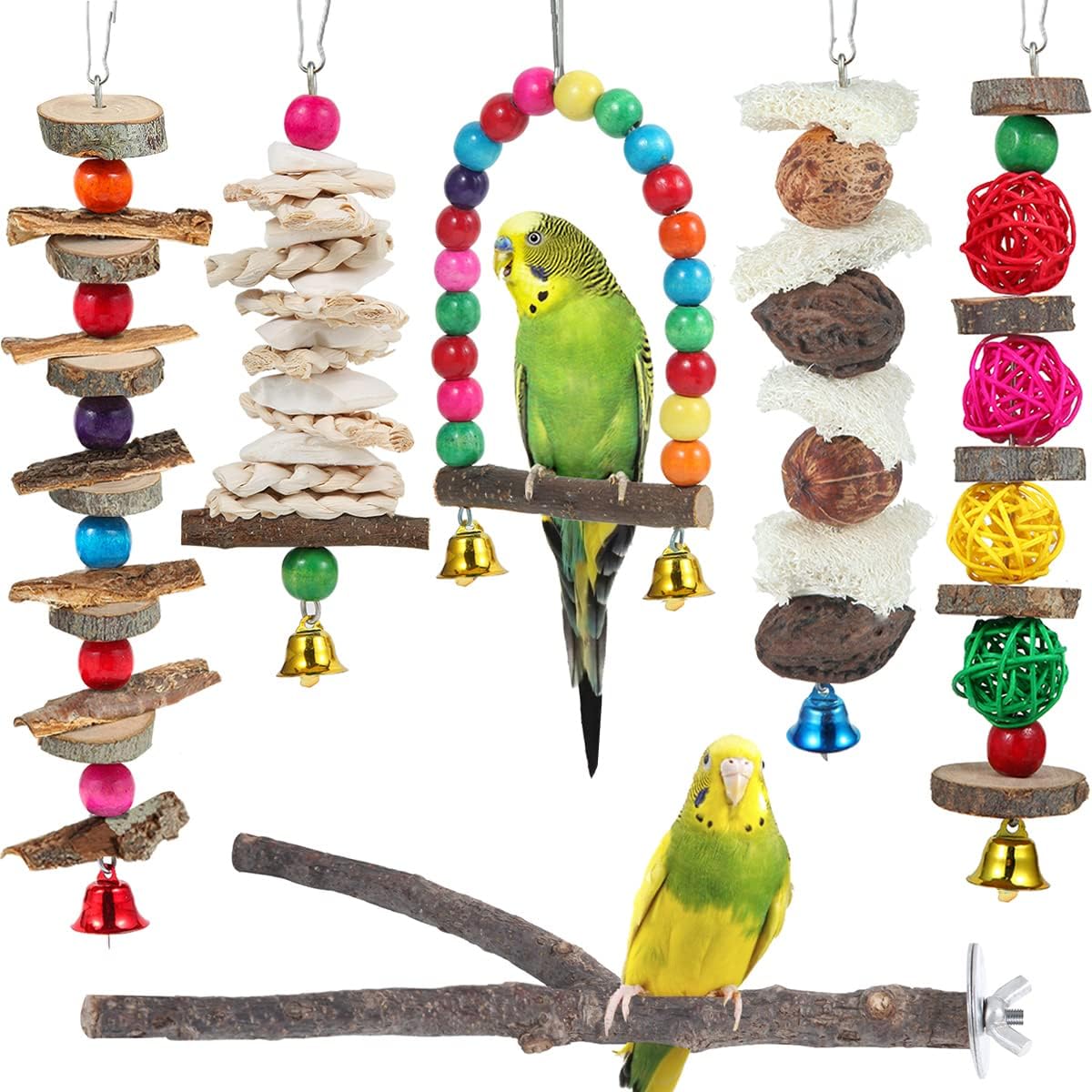
Wooden Bird Perch and Chew Toy Set for Small to Medium Birds
Expert choice for Wooden [Bird Perch
Image: The Wooden Bird Perch and Chew Toy Set offering natural enrichment.
When adding new items, think about variety. Combine different types of `small bird toys` and `medium bird toys` – some for shredding, some for foraging, and others for climbing. Natural wood, cotton rope, and untreated paper are generally excellent choices.
Strategic Placement for Maximum Benefit
The arrangement of `bird cage accessories` significantly impacts their usability. Place perches at varying heights and orientations to encourage climbing and movement. Ensure that perches are not directly above food or water bowls to prevent contamination. Provide a comfortable main perch, but also offer smaller, textured perches for variety.
Position chew toys and other `bird toys` in areas where your bird can easily access them without obstruction. Some birds prefer toys hanging from the top, while others enjoy manipulating items attached to the side of the cage. Experiment with different placements to discover your bird's preferences. Remember to leave open spaces for flight and movement within the cage as well.
Regular Maintenance and Rotation
Maintaining a clean and safe environment is crucial. All `bird cage accessories`, especially perches and toys, should be regularly cleaned and inspected for wear and tear. Chew toys, in particular, will need frequent replacement as they are designed to be destroyed.
To keep your bird engaged and prevent boredom, rotate their `bird toys` regularly. Have a selection of toys available and swap them out every week or two. This keeps the environment fresh and exciting, encouraging your bird to explore and interact with new items. Consider keeping a small `finch accessories` or `budgie toys` collection to ensure constant novelty.
Common Challenges in Bird Cage Enrichment & Smart Solutions
Even with the best intentions, pet parents can encounter challenges when trying to enrich their bird's environment. Here are some common issues and practical solutions.
Bird Ignores New Toys
It's common for birds to be wary of new items. They are creatures of habit and can be cautious. Don't be discouraged if your bird initially ignores a new `parrot perch` or `natural bird toy`.
- Solution: Introduce new toys gradually. Place them outside the cage for a few days before putting them inside. You can also try interacting with the toy yourself (gently) to show your bird it's safe. Sometimes, placing a treat on or near the new toy can encourage investigation. Patience is key; some birds take weeks to warm up to a new item.
Rapid Toy Destruction
Some birds, especially those with strong chewing instincts like conures or cockatiels, can destroy `wooden chew toy` items very quickly. While this might seem frustrating, it's actually a sign of a healthy, engaged bird!
- Solution: Embrace it! Rapid destruction means your bird is using the toy as intended, satisfying a natural need. Ensure you have a steady supply of durable, safe chew toys. Investing in a set like the Wooden Bird Perch and Chew Toy Set, which combines a sturdy perch with chewable elements, offers good value as the chewable parts can be replaced or replenished over time. This shows your bird is actively preventing boredom.
Space Constraints in Smaller Cages
For `small bird toys` or `medium bird toys` in smaller cages, space can be a limiting factor. Overcrowding a cage with too many accessories can hinder movement and create a cluttered, stressful environment.
- Solution: Opt for multi-functional `bird cage accessories` that serve several purposes. For example, a perch that also has chewable elements, or a foraging toy that attaches to the cage bars. Vertical space is often underutilized; hang toys at various heights to maximize engagement without sacrificing floor space. Regularly review and rotate items to keep the cage feeling fresh and spacious. You might find our guide on Choosing the Right Bird Cage Size helpful for optimizing space.
Expert Tips from Avian Veterinarians & Behaviorists
Drawing on the latest research and practical experience, avian experts consistently emphasize certain principles for optimal bird care. Integrating these insights into your bird's environment will significantly enhance their quality of life.
Material Safety and Natural Options
Avian veterinarians stress the critical importance of material safety. Birds explore with their beaks, meaning anything in their cage could potentially be ingested. Always choose `natural bird toy` options made from non-toxic materials.
Avoid plastics with unknown compositions, chemically treated wood, or items with glues and paints that aren't bird-safe. Natural woods like pine, maple, birch, and untreated cotton ropes are generally excellent choices. The Wooden Bird Perch and Chew Toy Set, for example, is crafted from safe, natural wood, giving pet parents peace of mind.
Image: Close-up of the natural wooden texture, highlighting safety.
The Power of Variety
Behaviorists highlight that variety is the spice of life for birds. A static cage environment quickly leads to boredom. Think beyond just a single type of `bird perch` or `bird toys`.
Introduce different textures (smooth, rough, soft, hard), shapes (round, flat, irregular), and types of engagement (shredding, climbing, foraging, preening). Rotate toys frequently, and even change the layout of perches occasionally. This keeps your bird mentally stimulated and physically agile, reducing the likelihood of stress-related behaviors. For more ideas, check out DIY [Bird Toys(/articles/how-to-prevent-bird-boredom-promote-wellbeing-the-essential-pet-parent-s-guide) for Enrichment].
Observing Your Bird's Behavior
Ultimately, your bird is the best guide to what they need. Avian experts recommend spending time observing your bird's interactions with its environment. What toys do they gravitate towards? Which perches do they use most? Do they seem stressed or bored?
Their behavior will tell you if an item is a hit or a miss. Use these observations to tailor your `bird cage accessories` to their individual preferences. Every bird is unique, and a personalized approach to enrichment will yield the best results for their well-being.
Frequently Asked Questions About Bird Perches & Chew Toys
Q: How often should I replace bird chew toys?
A: The frequency of replacement depends entirely on how quickly your bird destroys them. For active chewers, some toys might last only a few days, while others could last weeks. The goal is for the toy to be destroyed, as this satisfies their natural chewing instincts and helps maintain beak health. Always replace toys when they become too small to be safe, splintered, or soiled beyond cleaning.
Q: What is the best type of perch for my bird's feet?
A: The best perch setup includes a variety of materials, textures, and diameters. Avoid relying solely on smooth, uniform dowel perches, which can lead to foot problems. Natural branch perches (untreated and bird-safe wood), rope perches, calcium perches, and even concrete perches (used sparingly for nail conditioning) are excellent choices. This variety exercises different foot muscles and prevents pressure sores. The Wooden Bird Perch and Chew Toy Set offers a great natural wooden option.
Q: Are all wooden toys safe for birds?
A: No, not all wooden toys are safe. It's crucial that any wooden toy or perch is made from bird-safe, non-toxic wood and is free from any chemical treatments, paints, or glues. Common safe woods include pine, maple, birch, willow, and untreated fruitwoods. Always purchase from reputable sources that specify the materials used. Avoid cedar, redwood, and pressure-treated woods, as these can be toxic.
Q: My bird doesn't play with toys, what should I do?
A: This is a common challenge! First, ensure the toys are appropriate for your bird's species and size (e.g., `budgie toys` for a budgie). Introduce new toys slowly and gently, perhaps outside the cage first. Try different types of toys – shreddable, foraging, puzzle, preening – to see what sparks their interest. Sometimes, placing a favorite treat inside or on a toy can encourage interaction. Patience and positive reinforcement are key; don't force interaction.
Q: How can I prevent my bird from getting bored with their `bird stand` and `bird toys`?
A: The best strategy is regular rotation. Have a "toy library" and swap out 2-3 toys every week or two. This keeps the environment fresh and exciting. You can also occasionally rearrange perches and other `bird cage accessories`. Introducing new types of foraging opportunities or puzzle toys can also prevent boredom. The multi-functional design of products like the Wooden Bird Perch and Chew Toy Set helps by offering varied engagement from a single accessory.
Product Specification Summary: Wooden Bird Perch and Chew Toy Set
To give you a clear overview of the recommended product, here's a summary of its key specifications and benefits:
| Feature | Benefit | Ideal For |
|---|---|---|
| Natural Wooden Material | Safe chewing, promotes beak health, non-toxic | Parakeets, Cockatiels, Lovebirds, Budgies |
| Sturdy Perch Stand | Comfortable resting, exercise, foot health | Conures, Parrotlets, Finches, small-medium birds |
| Engaging Chew Elements | Prevents boredom, mental stimulation, stress relief | Birds with strong chewing instincts |
| Easy Installation | Quick setup, secure attachment to most bird cages | Busy pet owners seeking convenience |
| Versatile Design | Combines perch and toy, saves cage space, multi-functional | Cages needing optimized space and varied enrichment |
| Targeted Species | Parakeets, Conures, Cockatiels, Lovebirds, Parrotlets, Budgies, Finches, etc. | Small to medium-sized pet birds |
Image: The Wooden Bird Perch and Chew Toy Set securely installed in a bird cage.
Conclusion: A Happy Bird, A Happy Home
Creating an enriching environment for your pet bird is one of the most rewarding aspects of bird ownership. By understanding their natural instincts for chewing, perching, and mental stimulation, you can provide a home that fosters both physical health and psychological well-being. Investing in high-quality, safe `bird cage accessories` like a sturdy `bird perch` and engaging `wooden chew toy` is an investment in your bird's happiness.
Remember to prioritize natural materials, offer a variety of textures and activities, and always observe your bird's unique preferences. With thoughtful selection and regular maintenance, you can ensure your feathered friend enjoys a vibrant, stimulating, and healthy life for years to come. The Wooden Bird Perch and Chew Toy Set for Small to Medium Birds is an excellent starting point for enhancing any small to medium bird's habitat, bringing joy and natural enrichment to their daily routine.
Wooden Bird Perch and Chew Toy Set for Small to Medium Birds
Expert choice for Wooden Bird Perch and Chew Toy Set for Small to Medium Birds
Image: The Wooden Bird Perch and Chew Toy Set, showcasing its versatile design.
Image: A bird interacting with the Wooden Bird Perch and Chew Toy Set, demonstrating engagement.