How to Keep Your Cat Perfectly Hydrated - The Essential Pet Parent's Guide to Water Fountains
As devoted cat parents, we constantly strive to provide the best for our feline companions, from nutritious meals to cozy sleeping spots. However, one often overlooked yet critically important aspect of cat care is hydration. Proper water intake is fundamental to a cat's overall health, playing a vital role in everything from organ function to preventing serious medical conditions.
Cats, by nature, are not always the most enthusiastic drinkers, often preferring to get moisture from their prey in the wild. This evolutionary trait can make ensuring adequate hydration a challenge for indoor cats, who primarily rely on still water bowls. But what if there was a better way to encourage your beloved pet to drink more, naturally supporting their long-term health? This guide will delve into the world of cat water fountains, offering expert advice on how to revolutionize your cat's drinking habits and safeguard their well-being.
Understanding Feline Hydration Needs
For many cat owners, a simple bowl of water seems sufficient. Yet, a deeper understanding of feline physiology reveals why this conventional approach often falls short. Cats have a naturally low thirst drive compared to other animals, a legacy from their desert-dwelling ancestors who derived most of their hydration from their prey. This means they often don't drink enough water to compensate for moisture-deficient dry kibble diets.
The Feline Instinct to Drink
Cats are instinctively drawn to moving water. In the wild, running water is generally safer and fresher than stagnant pools, which can harbor bacteria and parasites. This ancient instinct makes a still water bowl far less appealing to a cat than a bubbling stream or a dripping faucet. They perceive moving water as cleaner, cooler, and more inviting, making them more likely to drink.
Why Still Water Bowls Fall Short
Beyond instinct, still water bowls present several practical disadvantages. Water left out for extended periods can quickly become stale, collect dust, and even grow biofilms of bacteria. Furthermore, some cats are sensitive to the taste of tap water, or they simply find the reflection in a still bowl unsettling. These factors combined often lead to inadequate water consumption, which can have severe health consequences over time.
The Risks of Dehydration for Cats
Chronic dehydration in cats is a silent threat that can lead to a host of health problems. Most notably, insufficient water intake significantly increases the risk of feline kidney disease and urinary tract infections (UTIs). These conditions are incredibly common and can be painful, expensive to treat, and even life-threatening. By encouraging consistent hydration, you are actively working to prevent these serious issues and support your cat's long-term vitality. In 2026, veterinarians continue to emphasize hydration as a cornerstone of preventative feline medicine.
The Superiority of Stainless Steel Fountains
When considering a pet hydration station, the material is paramount. Plastic fountains, while often affordable, can scratch easily, harboring bacteria and developing an unpleasant "pink slime" biofilm. They can also leach chemicals into the water, especially if exposed to sunlight or heat. Ceramic fountains are heavier and more hygienic but can be fragile.
This is where stainless steel cat fountains truly shine. Stainless steel is non-porous, highly durable, and incredibly easy to clean, resisting bacterial growth and preventing unpleasant odors. It doesn't leach chemicals, ensuring the water remains pure and safe for your cat. For these reasons, stainless steel remains the top recommendation from pet health experts in 2026 for its hygiene and longevity.
Step-by-Step Instructions / Expert Advice for Cat Water Fountains
Transitioning your cat to a water fountain doesn't have to be complicated. With a few strategic steps and a little patience, you can ensure your feline friend embraces their new hydration source.
Choosing the Right Fountain for Your Cat
Selecting the ideal automatic pet water dispenser involves considering several factors:
- Material: As discussed, stainless steel is highly recommended for hygiene and durability.
- Capacity: For single cats, a smaller fountain might suffice, but for multiple cats or to reduce frequent refills, a large capacity cat water bowl (e.g., 3.5L or 120oz) is ideal.
- Noise Level: A silent cat fountain with a whisper-quiet pet pump is crucial, especially for timid cats or owners sensitive to noise. Loud pumps can deter cats from drinking.
- Filtration System: Look for fountains that include filtered cat water to remove impurities, hair, and debris, ensuring fresh, clean water.
- Ease of Cleaning: A design that's simple to disassemble and clean is essential for maintaining hygiene and preventing bacterial buildup.
- Aesthetics: While secondary to function, a fountain that complements your home decor can be a bonus.
Setting Up Your New Cat Water Fountain
Once you've chosen your fountain, setup is straightforward. Always follow the manufacturer's specific instructions, but here's a general guide:
1. Unpack and Clean: Before initial use, thoroughly wash all components of the fountain (except the pump) with warm, soapy water. Rinse well to remove any residue. 2. Assemble the Pump: Submerge the pump in water according to instructions. Ensure it's properly secured and the power cord is routed safely. 3. Install Filters: Place the carbon and/or foam filters in their designated slots. These are crucial for providing purified water for pets. 4. Fill with Water: Fill the reservoir with fresh, clean water up to the maximum fill line. Avoid overfilling to prevent spills. 5. Plug In: Connect the power adapter to an outlet. Ensure the cord is placed where your cat cannot chew on it or trip over it. 6. Introduce Gradually: Place the fountain next to your cat's old water bowl for a few days. This allows them to investigate the new source at their own pace. Once they start using the fountain consistently, you can remove the old bowl.
Maintaining Optimal Fountain Hygiene
Regular cleaning is non-negotiable for any indoor cat fountain. Neglecting maintenance can lead to bacterial growth, making the fountain unappealing and potentially unhealthy for your cat. An easy clean cat bowl design significantly simplifies this task.
- Daily Check: Top off water as needed. Check for any debris or hair and remove it.
- Weekly Cleaning (or more often for multiple cats):
- Unplug the fountain and disassemble all parts.
- Wash the reservoir, trays, and any other components (excluding the pump) with warm water and pet-safe dish soap. A bottle brush can be helpful for nooks and crannies.
- Clean the pump: This is crucial! Disassemble the pump and use a small brush (often included with fountains) to clean the impeller and inside the motor housing. Hair and grime can clog the pump, reducing water flow and causing noise.
- Rinse all parts thoroughly to remove soap residue.
- Replace filters: Depending on the manufacturer's recommendations and the number of cats, filters typically need to be replaced every 2-4 weeks. Neglecting this step compromises the filtered cat water quality.
- Reassemble the fountain.

The Kiwilove fountain boasts a generous 120oz/3.5L capacity, which means fewer refills for you and a continuous supply of fresh water for your feline friends – perfect for households with multiple cats or busy schedules. The automatic silent pump is a game-changer, operating with barely a whisper, encouraging even the most timid cats to drink without being startled. This feature addresses one of the most common concerns for cat owners, ensuring a stress-free drinking experience. Plus, its easy clean water bowl design simplifies maintenance, ensuring hygiene is never a chore. Each unit also includes replacement filters right out of the box, providing continuous fresh, purified water from day one.
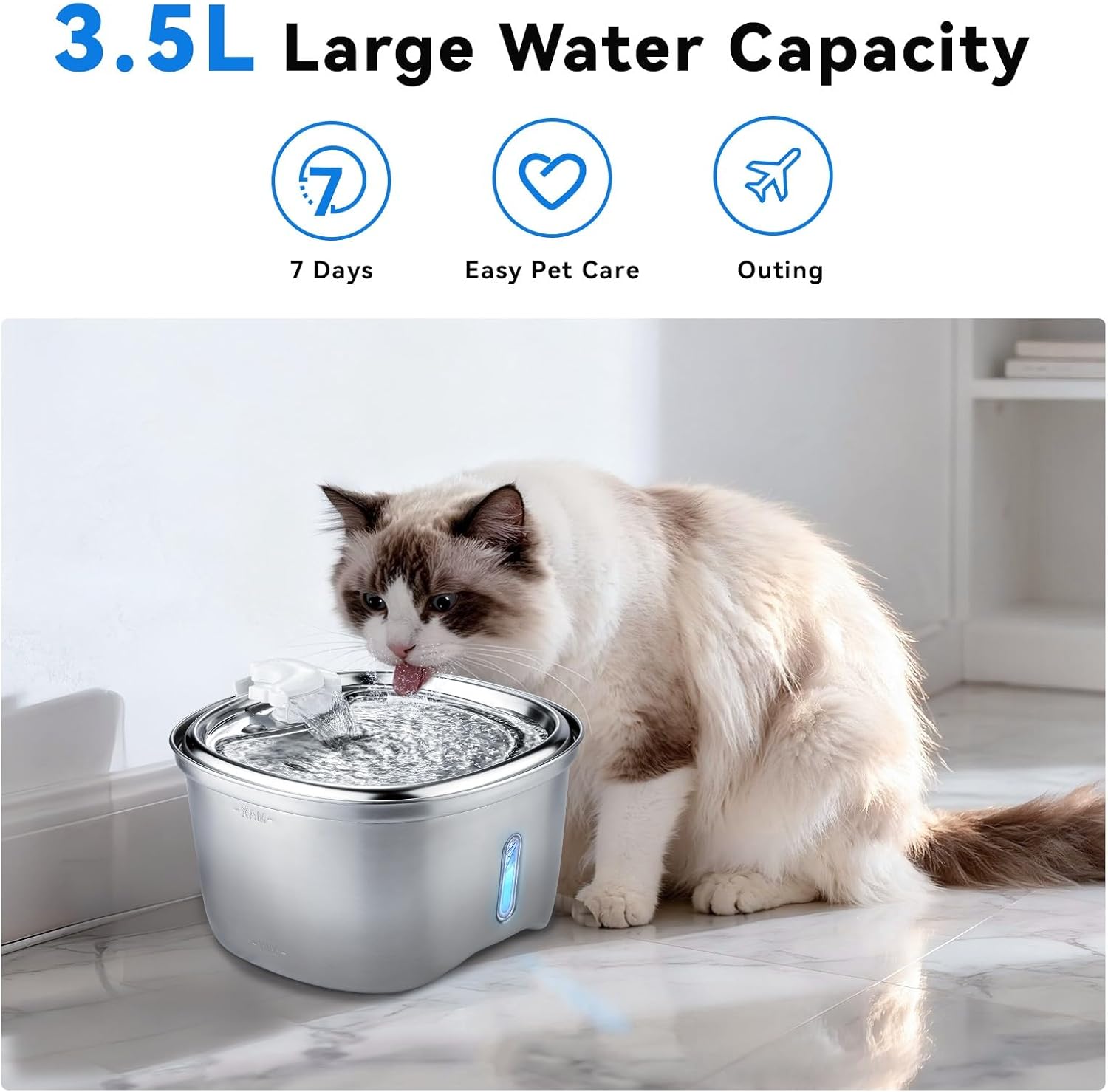
Beyond its functional superiority, the unique cat-shaped design of the Kiwilove fountain adds a charming aesthetic touch to your home, blending seamlessly with your existing decor. It's not just a utility; it's a piece of pet-friendly art. Ultimately, this cat drinking fountain actively promotes increased hydration, directly supporting your feline's kidney and urinary health, a benefit no loving pet parent can overlook. Given its features and positive kiwilove pet supplies reviews in 2026, it's an excellent choice for any cat owner prioritizing their pet's health and happiness.
Kiwilove Cat Water Fountain Stainless Steel, 120oz/3.5L
Expert choice for Kiwilove Cat Water Fountain Stainless Steel, 120oz/3.5L
Kiwilove Cat Water Fountain Technical Specifications
| Feature | Specification |
|---|---|
| Product Name | Kiwilove Cat Water Fountain Stainless Steel |
| Capacity | 120oz / 3.5 Liters |
| Material | Food-Grade Stainless Steel |
| Animal Type | Cat |
| Pump Type | Super Quiet Automatic Pump |
| Filtration | Multi-layer (includes replacement filters) |
| Design | Unique Cat-Shaped |
| Intended Use | Indoor |
| Cleaning | Easy-to-Disassemble for Cleaning |
| Key Benefit | Promotes Hydration, Prevents UTIs/Kidney Issues |
| Price (approx.) | $54.99 |

Common Challenges & Solutions with Cat Water Fountains
Even with the best intentions and a top-tier fountain, you might encounter a few hurdles. Knowing how to address them can ensure a smooth transition and consistent hydration for your cat.
My Cat Won't Drink From the Fountain!
This is a common concern, especially with timid or older cats. Patience is key.
- Give it Time: Some cats need several days, even a week or two, to adjust. Keep their old water bowl nearby initially.
- Location, Location, Location: Cats prefer to drink away from their food and litter box. Try placing the fountain in a quiet, low-traffic area. Ensure it's not near a noisy appliance.
- Different Flows: Some fountains offer multiple flow settings (bubbling, stream, waterfall). Experiment to see which your cat prefers. The cat drinking fountain might need a gentle flow to start.
- Temperature: Some cats prefer cooler water. If your fountain allows, ensure the water isn't getting too warm.
- Add a Treat: Gently place a treat or a few drops of tuna juice near the fountain to entice them to approach.
Dealing with Fountain Noise
While many modern fountains, like the Kiwilove, boast a silent pump, some can develop noise over time.
- Check Water Level: A common cause of pump noise is a low water level. Ensure the fountain is filled to the maximum line.
- Clean the Pump: Hair and debris can clog the impeller, causing the pump to vibrate and hum. Regular, thorough cleaning of the pump's internal components is essential for a whisper-quiet pet pump.
- Positioning: Ensure the pump is sitting flat and securely inside the reservoir. Any unevenness can cause vibrations.
- Rubber Mat: Placing a rubber mat underneath the fountain can help absorb vibrations and reduce noise.
Overcoming Cleaning Hurdles
Maintaining a clean fountain is vital, but it can feel like a chore. An easy clean cat bowl design helps immensely.
- Establish a Routine: Schedule weekly cleaning into your routine, just like litter box scooping. Consistency makes it less daunting.
- Right Tools: Invest in a small bottle brush or a set of pipe cleaners to reach tight spots within the pump and tubing. Many fountains, including the Kiwilove, come with a cleaning brush.
- Vinegar Soak: For stubborn mineral deposits or slime, periodically soak the non-electrical parts (and disassembled pump parts) in a solution of equal parts white vinegar and water for 30 minutes, then scrub and rinse thoroughly.
- Dishwasher Safe? Check if any parts of your stainless steel cat fountain are dishwasher safe. This can save significant time.

Power Outages and Backup Plans
Since automatic fountains require electricity, a power outage can leave your cat without water. Always have a backup plan.
- Emergency Bowl: Keep a traditional, clean water bowl handy for emergencies. If your cat is used to the fountain, they might not immediately go to a still bowl, so this is important.
- Manual Refill: If it's a short outage, you can manually pour water into the fountain's top tray to create a temporary flow, though this is only a stopgap.
Expert Tips from Veterinarians or Behaviorists
To maximize the benefits of your pet hydration station and ensure your cat is always well-hydrated, consider these expert recommendations.
Strategic Placement for Maximum Appeal
Where you place the fountain can significantly impact its usage. Cats are particular creatures.
- Away from Food and Litter: As mentioned, cats prefer their water source to be separate from their eating and toileting areas. This mimics natural instincts and prevents contamination.
- Quiet, Accessible Location: Choose a spot that is easily accessible but not in a high-traffic or noisy area of your home. A quiet corner of a living room or bedroom often works well.
- Multiple Locations: If you have a large home or multiple cats, consider having more than one indoor cat fountain. This increases the chances of your cat encountering a water source frequently.
The Multi-Cat Household Advantage
For homes with several felines, a large capacity cat water bowl like the 120oz Kiwilove is indispensable. Multiple water sources can prevent competition and ensure all cats have ample opportunity to drink.
- Reduce Competition: Placing fountains in different rooms or at different heights can cater to varying preferences and reduce any potential territorial disputes over resources.
- Monitor Intake: While harder to track individual intake with multiple cats, ensuring multiple accessible fountains is key to preventing dehydration in a busy household. Look for signs of drinking from all cats.
Encouraging the Hesitant Drinker
Some cats need extra encouragement to embrace a new cat water fountain.
- Start with Still: Initially, you might turn the fountain off and let your cat drink from the still reservoir. Once they are comfortable, turn it on at a low flow setting.
- Flavor Water: For a short period, you can add a small amount of low-sodium chicken broth (no onion or garlic) or tuna juice to the water to make it more enticing. Gradually reduce the additive as they adjust.
- Positive Reinforcement: When your cat approaches or drinks from the fountain, offer praise or a small treat. Create a positive association with the new water source.
Monitoring Your Cat's Hydration
Even with a fountain, it's wise to keep an eye on your cat's overall hydration.
- Litter Box Patrol: Monitor the amount of urine in the litter box. A healthy cat should produce a moderate amount of light-yellow urine regularly. Dark, concentrated urine or very little urine can be a sign of dehydration or kidney issues. Our Cat Litter Box Guide provides more insights.
- Skin Turgor Test: Gently pinch the skin on your cat's back between their shoulder blades. If they are well-hydrated, the skin should snap back into place immediately. If it's slow to return or "tents," your cat might be dehydrated. For more on cat health, check our Common Cat Health Problems article.
- Gum Check: Healthy gums should be moist and pink. Pale or dry, tacky gums can indicate dehydration.
- Dietary Adjustments: Consider incorporating more wet food into your cat's diet, as it provides a significant amount of moisture, complementing the water fountain. This is often recommended by veterinarians in 2026 for feline kidney health.
FAQ Section
Q: Why do cats prefer running water to still water?
A: Cats are instinctively drawn to running water because, in the wild, moving water is typically fresher, safer, and less likely to contain bacteria or contaminants than stagnant pools. This natural preference makes them more likely to drink from a cat water fountain.
Q: How often should I clean my cat water fountain?
A: You should top off the water daily and perform a thorough cleaning of all components (including the pump) at least once a week. For multiple cats or in warmer climates, more frequent cleaning might be necessary to prevent bacterial buildup and ensure filtered cat water quality.
Q: What capacity cat water fountain is best for multiple cats?
A: For multi-cat households, a large capacity cat water bowl of at least 3.5 liters (120oz) is highly recommended. This reduces the frequency of refills and ensures a continuous supply of fresh water for all your feline friends, like the Kiwilove Cat Water Fountain.
Q: Can a cat water fountain help prevent urinary tract infections (UTIs) in cats?
A: Yes, absolutely. Increased water intake is one of the most effective ways to prevent UTIs and support overall feline kidney health. By encouraging your cat to drink more, a water fountain helps flush out the urinary tract, making it harder for bacteria to settle and cause infections.
Q: Are stainless steel cat fountains better than plastic ones?
A: Yes, stainless steel cat fountains are generally considered superior. Stainless steel is non-porous, highly durable, and resistant to bacterial growth, making it more hygienic and easier to clean than plastic. It also doesn't leach chemicals into the water, ensuring a safer drinking experience for your pet.
Q: My cat is scared of the fountain. What should I do?
A: Introduce the fountain gradually. Place it near their old water bowl initially. Try turning the fountain off for a few days so they can get used to the presence of the new object, then turn it on at a low flow. You can also try adding a small amount of catnip or a favored treat near the fountain to encourage positive association. Patience is key.
Q: What kind of filters do cat water fountains use, and how often should they be replaced?
A: Most automatic pet water dispensers use activated carbon filters, often combined with a pre-filter sponge. Carbon filters remove odors, tastes, and impurities, while the sponge catches hair and debris. Filters should typically be replaced every 2-4 weeks, depending on the manufacturer's recommendations and usage, to ensure purified water for pets.
Q: Is the Kiwilove Cat Water Fountain noisy?
A: The Kiwilove Cat Water Fountain features a super quiet pump designed to operate with minimal noise. This makes it an excellent choice for timid cats who might be scared by louder fountains and ensures a peaceful home environment.
---
Investing in a high-quality cat water fountain is more than just a convenience; it's a proactive step towards ensuring your cat's long-term health and happiness. By embracing the natural instincts of your feline friend and providing a constant source of fresh, flowing water, you're actively preventing common health issues and promoting their overall well-being. The Kiwilove Cat Water Fountain Stainless Steel, 120oz/3.5L stands out as a top contender in 2026, offering a blend of hygiene, capacity, quiet operation, and charming design that makes it an ideal choice for any discerning cat parent. Make the switch today and witness the positive impact on your cherished companion's hydration habits.
Kiwilove Cat Water Fountain Stainless Steel, 120oz/3.5L
Expert choice for Kiwilove Cat Water Fountain Stainless Steel, 120oz/3.5L